

Moon Day July 20: Meaning, History & Celebration
Moon Day (July 20): Meaning, History & How to Celebrate It (2026 Guide)
Step outside on the evening of July 20 and look up. That glowing Moon hanging in the summer sky is the same one three brave men traveled a quarter of a million miles to touch — and the same one humanity first stood upon, on this very date, in 1969.
Moon Day is observed every year on July 20 to commemorate the Apollo 11 Moon landing — the day human beings first set foot on another world. What began as an American achievement has grown into a global celebration of courage, curiosity, and the wonder of creation itself.
In this guide you’ll discover the full meaning and history of Moon Day: the Apollo 11 story and its heroic crew, why July 20 was chosen, how the day became an official observance, meaningful ways to celebrate it, plus inspirational Moon Day blessings, prayers of wonder, and Bible verses about the heavens.
What Is Moon Day?
Moon Day marks the anniversary of the single most daring journey in human history: leaving our home planet and standing on the Moon. The meaning of the day is layered. For scientists, it honors an unmatched technological achievement. For Americans, it marks a proud national moment. For dreamers everywhere, it is living proof that the impossible is sometimes just the not-yet-attempted.
Unlike major federal holidays, Moon Day is a quieter observance — no day off work, no parades in every town. It lives in planetariums, classrooms, space centers, and in the simple act of stepping outside on a July evening and looking up. That quietness suits it: the Moon itself asks for nothing but attention, and rewards it richly.
- National Moon Day (USA): proclaimed in 1971, honoring the Apollo 11 anniversary
- International Moon Day: recognized by the United Nations in 2021, celebrating all nations’ lunar exploration
- Apollo 11 anniversary: the historic 1969 landing at the heart of it all
- A day of wonder: inspiring curiosity, science, and gratitude for creation
The History of Moon Day: Apollo 11’s Giant Leap
To understand Moon Day, you have to go back to the summer of 1969 — to a crew of three, a towering rocket, and a mission the world watched with held breath.
The Mission
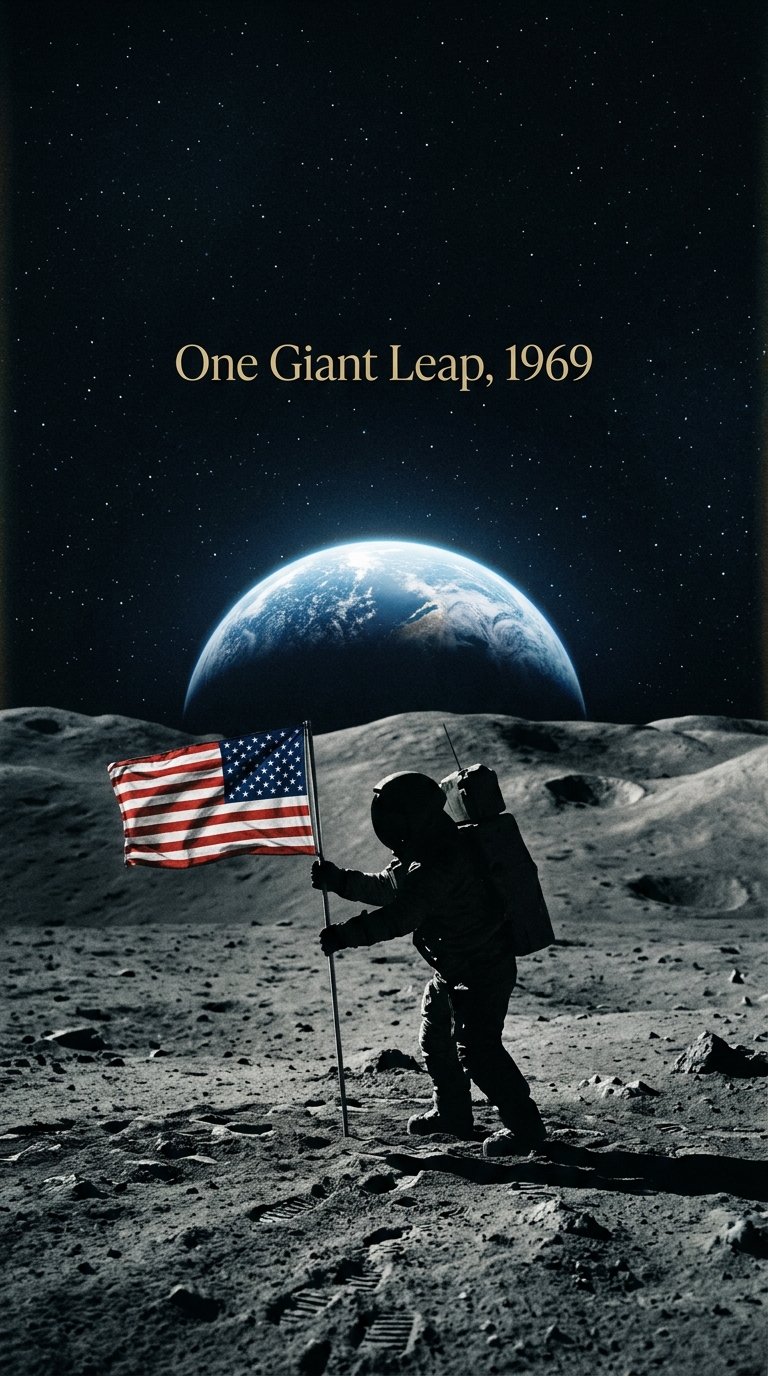
On July 16, 1969, Apollo 11 launched from Kennedy Space Center atop a Saturn V rocket — the most powerful rocket ever flown at the time. Aboard were three astronauts: Commander Neil Armstrong, Lunar Module Pilot Buzz Aldrin, and Command Module Pilot Michael Collins. Their destination: the Moon, some 238,855 miles away. The journey took just over three days, with the whole world following every mile.
The Landing — July 20, 1969
On July 20, Armstrong and Aldrin descended to the lunar surface in the lunar module Eagle while Collins remained in orbit aboard the command module Columbia. The Eagle touched down in the Sea of Tranquility at 20:17 UTC, and Armstrong radioed the famous words: “Houston, Tranquility Base here. The Eagle has landed.” The landing site was named Tranquility Base — humanity’s first outpost on another world.
The First Steps
About six hours after landing, Neil Armstrong climbed down the ladder and became the first human to set foot on the Moon, speaking the immortal line: “That’s one small step for man, one giant leap for mankind.” Buzz Aldrin followed him onto the surface about 19 minutes later. Together they spent roughly two and a quarter hours outside, collecting 21.5 kilograms of lunar rock and soil, planting the American flag, and conducting experiments. In total, they spent more than 21 hours on the lunar surface before rejoining Collins. The crew splashed down safely in the Pacific Ocean on July 24, after eight days in space. An estimated 600 million people — a fifth of the world’s population — watched the landing live on television.
From One Landing to a Global Day
In 1971, President Richard Nixon proclaimed July 20 as National Moon Day in the United States, honoring the anniversary of the first Moon landing. Decades later, the celebration went global: in 2021, the United Nations General Assembly formally recognized July 20 as International Moon Day, celebrating not just Apollo 11 but the achievements of all nations in lunar exploration — and promoting peaceful, sustainable exploration of the Moon for the future. Today, with NASA’s Artemis program aiming to return astronauts to the lunar surface, Moon Day feels less like a look backward and more like a promise of what’s next.
Why July 20?
July 20 marks the date the Eagle landed on the Moon in 1969 (July 20, 1969, at 20:17 UTC). There’s a charming footnote: Armstrong’s historic first step technically happened at 02:56 UTC on July 21 — but in the United States, where mission control watched, it was still the evening of July 20. So July 20 remains the date the world celebrates: the day humanity arrived, even if the first footprint came a few hours later.
How to Celebrate Moon Day
Moon Day doesn’t require a telescope or a ticket to Houston. Here are meaningful ways to mark it:

- Go moon-gazing. Step outside after sunset on July 20 and simply look up. Bring family or friends — shared wonder is the best kind.
- Watch the landing footage. The original Apollo 11 broadcasts and documentaries bring the tension and triumph of that day vividly to life.
- Visit a planetarium or science museum. Many host special Moon Day programs, lunar exhibits, and family activities every July 20.
- Read the astronauts’ story. Books and firsthand accounts from Armstrong, Aldrin, and Collins turn history into something personal.
- Teach a child. Show a young person the Moon through binoculars and tell them people walked there. Watch their imagination ignite.
- Learn about Artemis. NASA’s program to return humans to the Moon — including the first woman — is writing the next chapter right now.
- Photograph the Moon. Even a phone camera can capture a beautiful July Moon. Share it and spread the wonder.
- Write a Moon Day blessing. Send friends or family a short note of wonder and gratitude (see the blessings below).
- Support space education. Donate to or volunteer with organizations that bring science to young people.
- Pause in gratitude. Take one quiet minute to thank God for the heavens above — and for the courage He placed in human hearts.
Inspirational Moon Day Blessings and Quotes
Original words of wonder to share on July 20 — in cards, texts, or social posts.
- Happy Moon Day! May the same courage that carried three men to the Moon carry you through whatever feels impossible today.
- On this day in 1969, humanity proved that dreams with deadlines become history. Keep dreaming — and keep working.
- The Moon is 238,855 miles away, and we still reached it. Your goals are closer than you think. Happy Moon Day!
- May you look at the Moon tonight and remember: someone once looked at it and said, “Let’s go.” Be that someone in your own life.
- Happy Moon Day! Like the Moon, you don’t have to be the sun to light up someone’s night.
- They said it couldn’t be done — until three brave souls did it. Whatever “they” told you, prove them wrong. Happy Moon Day.
- On July 20, we celebrate the giant leap. Today, take your own small step — it might be giant later.
- May the wonder of the heavens fill your heart tonight, and may you never stop reaching for what seems out of reach.
- Happy Moon Day! The Eagle landed because thousands of people believed in one impossible dream. Believe in yours.
- Tonight the Moon shines a little brighter — or maybe we just notice it more. Either way, look up and be amazed.
- One small step for man reminded us that big things start small. Start yours today. Happy Moon Day!
- May God bless you with the curiosity of an explorer, the courage of an astronaut, and the wonder of a child looking at the Moon.
Prayers of Wonder Under the Moon
Short prayers for Moon Day — to say alone under the night sky or share with family.
A Prayer of Awe
- Lord, when I look at the Moon tonight, I am amazed — at Your creation and at the courage You placed in human hearts to reach it. Fill me with wonder that never fades and gratitude that never sleeps. Amen.
- Heavenly Father, the heavens declare Your glory, and tonight the Moon preaches its own sermon. Thank You for a universe so vast and a love so personal that You know my name within it. Amen.
A Prayer for Dreamers
- God, bless the dreamers — the children looking through telescopes, the scientists sketching rockets, the quiet souls with impossible ideas. Give them courage like Armstrong’s, teamwork like Apollo’s, and faith that moves them forward. Amen.
- Lord, on this Moon Day I pray for everyone reaching for something that seems out of reach. Remind them that with You, no distance is too far and no dream too distant. Guide their steps — small or giant. Amen.
Bible Verses About the Moon and the Heavens
Scripture has always pointed upward. These verses pair beautifully with Moon Day reflection.
Verses of Wonder
- “The heavens declare the glory of God; the skies proclaim the work of his hands.” — Psalm 19:1
- “When I consider your heavens, the work of your fingers, the moon and the stars, which you have set in place, what is mankind that you are mindful of them…” — Psalm 8:3-4
Verses of Creation

- “God made two great lights — the greater light to govern the day and the lesser light to govern the night.” — Genesis 1:16
- “…the moon and stars to govern the night; His love endures forever.” — Psalm 136:9
- “This is what the Lord says, he who appoints the sun to shine by day, who decrees the moon and stars to shine by night…” — Jeremiah 31:35
How to Celebrate Moon Day Meaningfully
You don’t need a big plan — just intention. Here’s a simple four-step way to make July 20 count:
- Learn one true story. Read about Apollo 11, the crew, or the mission — real history makes the day real. Start with the landing itself.
- Look up with someone. Wonder multiplies when shared. Take a child, a friend, or your family outside and find the Moon together.
- Share one blessing. Send a Moon Day message or quote to someone who needs encouragement. Wonder is meant to be given away.
- End with gratitude. Close the day thanking God — for creation’s beauty, for human courage, and for the dreams still ahead of you.
Frequently Asked Questions
What is the meaning of Moon Day?
Moon Day commemorates humanity’s first landing on the Moon — the Apollo 11 mission on July 20, 1969. It celebrates human courage, scientific achievement, and the wonder of space exploration.
Why is Moon Day celebrated on July 20?
July 20, 1969 is the date the Apollo 11 lunar module Eagle landed on the Moon. President Nixon proclaimed it National Moon Day in 1971, and the UN recognized it as International Moon Day in 2021.
Who were the Apollo 11 astronauts?
Commander Neil Armstrong (first to walk on the Moon), Lunar Module Pilot Buzz Aldrin (second), and Command Module Pilot Michael Collins, who remained in lunar orbit aboard Columbia.
What did Neil Armstrong say on the Moon?
“That’s one small step for man, one giant leap for mankind” — spoken as he became the first human to set foot on the lunar surface.
How can I celebrate Moon Day with kids?
Go moon-gazing together, watch Apollo 11 documentaries, visit a planetarium, read astronaut stories, or build a model rocket. The goal is simple: spark wonder.
Look Up Tonight
On July 20, 1969, two men stood on the Moon and looked back at Earth — and the world was never the same. This Moon Day, do the reverse: stand on Earth and look up at the Moon. “The heavens declare the glory of God.” — Psalm 19:1. Some nights, you can almost hear them.